BMW 3. seeria Cabrio (E36) kuulus kolmanda põlvkonna 3. seeria mudeliperre ning tõi BMW avatud kerega mudelitesse 1990. aastatel senisest rohkem küpsust, mugavust ja elegantsi. Pärast E36 sedaani debüüti 1990. aastal ja kupee lisandumist 1991. aastal jõudis kabriolett mudelivalikusse 1993. aastal. See täiendas E36 perekonda klassikalise neljakohalise avatud kerega versiooniga, mis ühendas BMW-le omase juhikeskse sõidutunde ja igapäevase kasutatavuse.
E36 Cabrio põhines tehniliselt E36 Coupé kontseptsioonil ning selle välimust mõjutasid kupeega sarnased proportsioonid. Pikk ja madal mootorikate, madal küljejoon ning tasakaalustatud kerekuju andsid autole elegantse ja sportliku ilme. Võrreldes varasema E30 kabrioletiga mõjus E36 suurema, viimistletuma ja kaasaegsema mudelina, kuid säilitas samal ajal klassikalise pehme katusega BMW kabrioleti olemuse.
Avatud kere tõttu oli E36 Cabrio konstruktsioon võrreldes kupeega tugevdatud, et kompenseerida katuse puudumist ning säilitada võimalikult hea kerejäikus ja sõiduomadused. Kangaskatus volditi kere tagaossa ning mudelit sai sõltuvalt versioonist ja varustusest tellida ka elektriliselt juhitava katusega. Nii pakkus E36 Cabrio head tasakaalu emotsionaalse avatud sõidu, mugavuse ja praktilise kasutatavuse vahel.
Mootorivalikus kasutati bensiinimootoreid. Valik algas neljasilindriliste versioonidega, mis pakkusid mõistlikku kasutuskulu ja igapäevast praktilisust. Kuuesilindrilised mudelid andsid kabrioletile märksa sujuvama ja rafineerituma iseloomu ning sobisid hästi auto elegantse olemusega. Tavaversioonide hulgas tõusis mudelivaliku tippu 328i Cabrio, mille 2,8-liitrine ridakuus arendas 193 hobujõudu. Lisaks tavaversioonidele kuulus E36 kabriolettide hulka ka M3 Cabrio, mis oli juba eraldi BMW M-mudel.
BMW 3. seeria Cabrio (E36) tähtsus seisneb selles, et see kinnistas 3. seeria kabrioleti kui BMW mudelivaliku püsiva ja ihaldusväärse osa. See ei olnud ainult kupee avatud katusega versioon, vaid iseseisva iseloomuga mudel, mis ühendas sportliku sõidutunde, neljakohalise praktilisuse ja elegantse välimuse. Kokku toodeti E36 Cabrio kerega 196 544 autot, mis näitab selle mudeli tugevat populaarsust 1990. aastate BMW valikus.
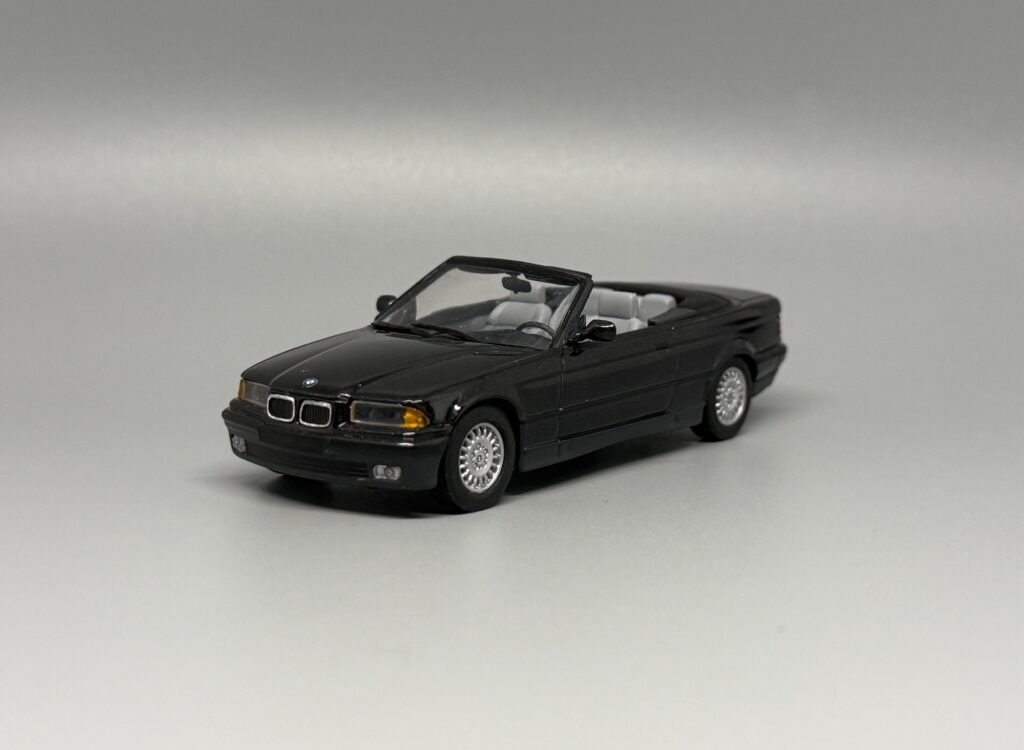
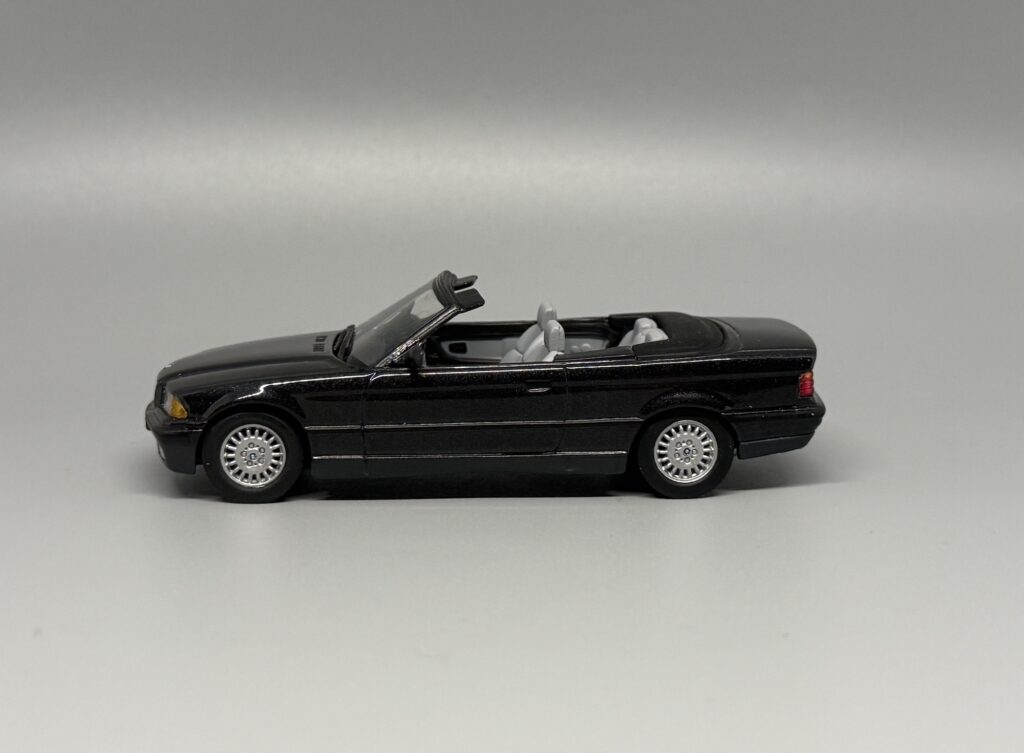
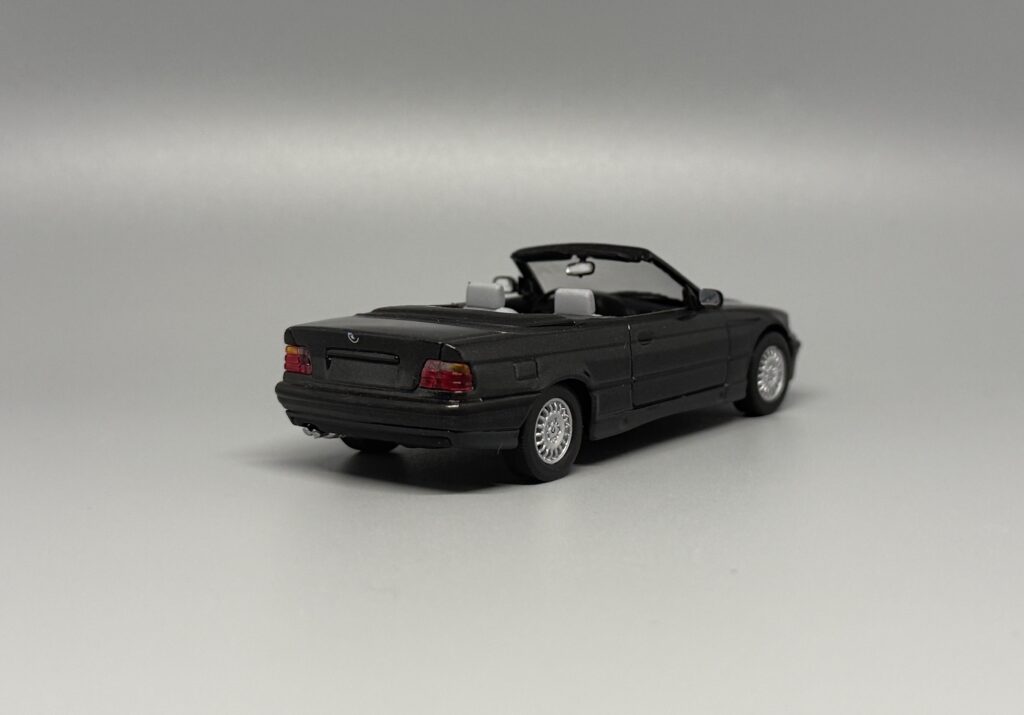
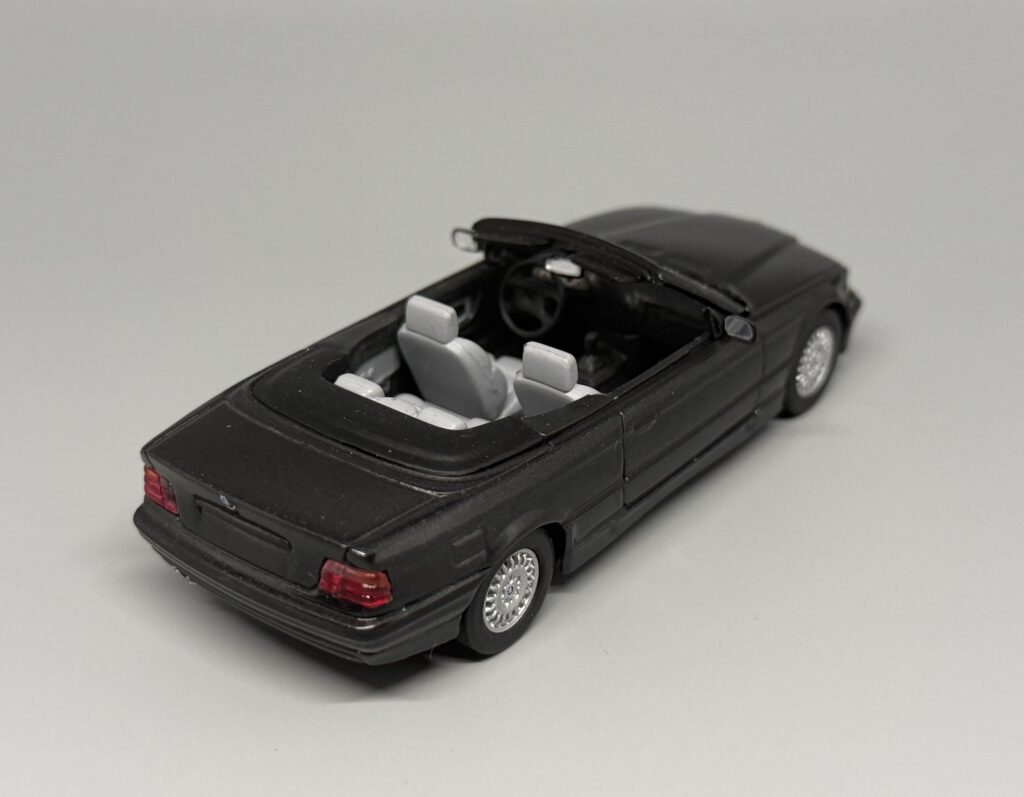
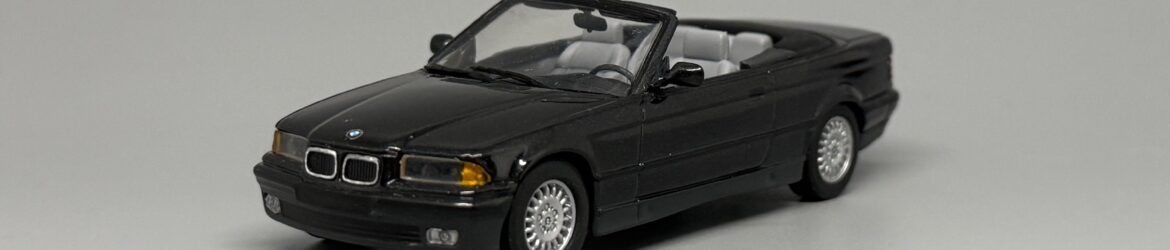
Minu kollektsioonis olev mudel on Minichampsi toodang. Mudel kujutab 1992. aasta autot; seeriatootmisse jõudis E36 Cabrio 1993. aastal.
Tehnilised andmed lühidalt:
Tootmisaeg: 1993–1999
Tootmiskoht: Saksamaa
Keretüüp: neljakohaline kaheukseline kabriolett
Mootorid: nelja- ja kuuesilindrilised bensiinimootorid
Võimsus: tavaversioonides sõltuvalt mudelist kuni 193 hj 328i Cabrio puhul
Katus: pehme kangaskatus
Veoskeem: tagavedu
Tootmisarv: 196 544 E36 Cabrio kerega autot
Eripära: E36 Coupé tehnilisel alusel loodud elegantne neljakohaline kabriolett, mis kinnistas 3. seeria avatud kerega mudelite koha BMW valikus
BMW 3 Series Cabriolet (E36) belonged to the third generation of the BMW 3 Series and brought greater maturity, comfort and elegance to BMW’s open-top models in the 1990s. After the debut of the E36 Saloon in 1990 and the Coupé in 1991, the Cabriolet joined the model range in 1993. It added a classic four-seat open-top version to the E36 family, combining BMW’s driver-focused character with everyday usability.
The E36 Cabriolet was technically based on the E36 Coupé concept, and its appearance was shaped by similar proportions. The long and low bonnet, low beltline and well-balanced body gave the car an elegant yet sporty appearance. Compared with the earlier E30 Cabriolet, the E36 felt larger, more refined and more modern, while still retaining the traditional character of a soft-top BMW convertible.
Because of its open body, the E36 Cabriolet had a reinforced structure compared with the Coupé in order to compensate for the absence of a fixed roof and to preserve body rigidity and driving characteristics as much as possible. The fabric roof folded into the rear of the body, and depending on version and equipment, the model could also be ordered with an electrically operated roof. In this way, the E36 Cabriolet offered a good balance between open-air driving emotion, comfort and practical usability.
The engine range consisted of petrol engines. The line-up began with four-cylinder versions, which offered reasonable running costs and everyday practicality. The six-cylinder models gave the Cabriolet a much smoother and more refined character, well suited to the elegant nature of the car. Among the regular versions, the 328i Cabrio sat at the top of the range, with its 2.8-litre straight-six engine producing 193 hp. In addition to the regular models, the E36 Cabriolet range also included the M3 Cabrio, which was a separate BMW M model.
The significance of the BMW 3 Series Cabriolet (E36) lies in the way it helped establish the 3 Series convertible as a permanent and desirable part of the BMW model range. It was not merely an open-top version of the Coupé, but a model with its own character, combining sporty driving feel, four-seat practicality and elegant styling. A total of 196,544 E36 Cabriolet-bodied cars were produced, showing the strong popularity of this model in BMW’s 1990s line-up.
The model in my collection is produced by Minichamps. The model represents a 1992 car; the E36 Cabriolet entered series production in 1993.
Technical data in brief:
Production period: 1993–1999
Production location: Germany
Body style: four-seat two-door cabriolet
Engines: four- and six-cylinder petrol engines
Power: up to 193 hp in regular versions, depending on model, for the 328i Cabrio
Roof: soft fabric roof
Drivetrain: rear-wheel drive
Production number: 196,544 E36 Cabriolet-bodied cars
Special feature: elegant four-seat cabriolet based on the technical foundation of the E36 Coupé, helping to establish open-top 3 Series models as a permanent part of the BMW range
BMW 3. seeria Cabrio (E36) kuulus kolmanda põlvkonna 3. seeria mudeliperre ning tõi BMW avatud kerega mudelitesse 1990. aastatel senisest rohkem küpsust, mugavust ja elegantsi. Pärast E36 sedaani debüüti 1990. aastal ja kupee lisandumist 1991. aastal jõudis kabriolett mudelivalikusse 1993. aastal. See täiendas E36 perekonda klassikalise neljakohalise avatud kerega versiooniga, mis ühendas BMW-le omase juhikeskse sõidutunde ja igapäevase kasutatavuse.
E36 Cabrio põhines tehniliselt E36 Coupé kontseptsioonil ning selle välimust mõjutasid kupeega sarnased proportsioonid. Pikk ja madal mootorikate, madal küljejoon ning tasakaalustatud kerekuju andsid autole elegantse ja sportliku ilme. Võrreldes varasema E30 kabrioletiga mõjus E36 suurema, viimistletuma ja kaasaegsema mudelina, kuid säilitas samal ajal klassikalise pehme katusega BMW kabrioleti olemuse.
Avatud kere tõttu oli E36 Cabrio konstruktsioon võrreldes kupeega tugevdatud, et kompenseerida katuse puudumist ning säilitada võimalikult hea kerejäikus ja sõiduomadused. Kangaskatus volditi kere tagaossa ning mudelit sai sõltuvalt versioonist ja varustusest tellida ka elektriliselt juhitava katusega. Nii pakkus E36 Cabrio head tasakaalu emotsionaalse avatud sõidu, mugavuse ja praktilise kasutatavuse vahel.
Mootorivalikus kasutati bensiinimootoreid. Valik algas neljasilindriliste versioonidega, mis pakkusid mõistlikku kasutuskulu ja igapäevast praktilisust. Kuuesilindrilised mudelid andsid kabrioletile märksa sujuvama ja rafineerituma iseloomu ning sobisid hästi auto elegantse olemusega. Tavaversioonide hulgas tõusis mudelivaliku tippu 328i Cabrio, mille 2,8-liitrine ridakuus arendas 193 hobujõudu. Lisaks tavaversioonidele kuulus E36 kabriolettide hulka ka M3 Cabrio, mis oli juba eraldi BMW M-mudel.
BMW 3. seeria Cabrio (E36) tähtsus seisneb selles, et see kinnistas 3. seeria kabrioleti kui BMW mudelivaliku püsiva ja ihaldusväärse osa. See ei olnud ainult kupee avatud katusega versioon, vaid iseseisva iseloomuga mudel, mis ühendas sportliku sõidutunde, neljakohalise praktilisuse ja elegantse välimuse. Kokku toodeti E36 Cabrio kerega 196 544 autot, mis näitab selle mudeli tugevat populaarsust 1990. aastate BMW valikus.
Minu kollektsioonis olev mudel on Minichampsi toodang. Mudel kujutab 1992. aasta autot; seeriatootmisse jõudis E36 Cabrio 1993. aastal.
Tehnilised andmed lühidalt:
Tootmisaeg: 1993–1999
Tootmiskoht: Saksamaa
Keretüüp: neljakohaline kaheukseline kabriolett
Mootorid: nelja- ja kuuesilindrilised bensiinimootorid
Võimsus: tavaversioonides sõltuvalt mudelist kuni 193 hj 328i Cabrio puhul
Katus: pehme kangaskatus
Veoskeem: tagavedu
Tootmisarv: 196 544 E36 Cabrio kerega autot
Eripära: E36 Coupé tehnilisel alusel loodud elegantne neljakohaline kabriolett, mis kinnistas 3. seeria avatud kerega mudelite koha BMW valikus
BMW 3 Series Cabriolet (E36) belonged to the third generation of the BMW 3 Series and brought greater maturity, comfort and elegance to BMW’s open-top models in the 1990s. After the debut of the E36 Saloon in 1990 and the Coupé in 1991, the Cabriolet joined the model range in 1993. It added a classic four-seat open-top version to the E36 family, combining BMW’s driver-focused character with everyday usability.
The E36 Cabriolet was technically based on the E36 Coupé concept, and its appearance was shaped by similar proportions. The long and low bonnet, low beltline and well-balanced body gave the car an elegant yet sporty appearance. Compared with the earlier E30 Cabriolet, the E36 felt larger, more refined and more modern, while still retaining the traditional character of a soft-top BMW convertible.
Because of its open body, the E36 Cabriolet had a reinforced structure compared with the Coupé in order to compensate for the absence of a fixed roof and to preserve body rigidity and driving characteristics as much as possible. The fabric roof folded into the rear of the body, and depending on version and equipment, the model could also be ordered with an electrically operated roof. In this way, the E36 Cabriolet offered a good balance between open-air driving emotion, comfort and practical usability.
The engine range consisted of petrol engines. The line-up began with four-cylinder versions, which offered reasonable running costs and everyday practicality. The six-cylinder models gave the Cabriolet a much smoother and more refined character, well suited to the elegant nature of the car. Among the regular versions, the 328i Cabrio sat at the top of the range, with its 2.8-litre straight-six engine producing 193 hp. In addition to the regular models, the E36 Cabriolet range also included the M3 Cabrio, which was a separate BMW M model.
The significance of the BMW 3 Series Cabriolet (E36) lies in the way it helped establish the 3 Series convertible as a permanent and desirable part of the BMW model range. It was not merely an open-top version of the Coupé, but a model with its own character, combining sporty driving feel, four-seat practicality and elegant styling. A total of 196,544 E36 Cabriolet-bodied cars were produced, showing the strong popularity of this model in BMW’s 1990s line-up.
The model in my collection is produced by Minichamps. The model represents a 1992 car; the E36 Cabriolet entered series production in 1993.
Technical data in brief:
Production period: 1993–1999
Production location: Germany
Body style: four-seat two-door cabriolet
Engines: four- and six-cylinder petrol engines
Power: up to 193 hp in regular versions, depending on model, for the 328i Cabrio
Roof: soft fabric roof
Drivetrain: rear-wheel drive
Production number: 196,544 E36 Cabriolet-bodied cars
Special feature: elegant four-seat cabriolet based on the technical foundation of the E36 Coupé, helping to establish open-top 3 Series models as a permanent part of the BMW range
Foto päris autost. Allikas: bmwgroup-classic.com
Photo of the real car. Source: bmwgroup-classic.com