BMW 3. seeria sedaan (E90) oli mudel, millega BMW viis oma kompaktse premium-klassi keskse mudelirea uude ajastusse. 2005. aastal turule jõudnud E90 põlvkond tõi võrreldes eelkäija E46-ga kaasa modernsema disaini, suurema kere, parema turvavarustuse ja veelgi küpsema üldmulje. Samal ajal säilis 3. seeriale omane juhikeskne iseloom, mis oli jätkuvalt üks mudeli suurimaid tugevusi. E90 sedaan ühendas sportlikkuse, mugavuse ja igapäevase kasutatavuse viisil, mis tegi sellest ühe 2000. aastate keskpaiga olulisema BMW mudeli.
Tehniliselt tõi E90 kaasa mitmeid uuendusi nii veermiku, elektroonika kui ka jõuallikate osas. Võrreldes eelkäijaga muutus auto jäigemaks, turvalisemaks ja tehnoloogiliselt kaasaegsemaks, kuid säilitas siiski klassikalise BMW tunnetuse, kus tähtsal kohal olid tagavedu, hea kaalujaotus ja täpne juhitavus. Disaini poolest tähistas E90 samuti muutust, sest see oli üks esimesi 3. seeria põlvkondi, kus oli selgelt näha 2000. aastate BMW-le omast julgemat vormikeelt. Nii kujunes E90 sedaanist mudel, mis sidus traditsioonilise 3. seeria iseloomu uue ajastu tehnika ja välimusega.
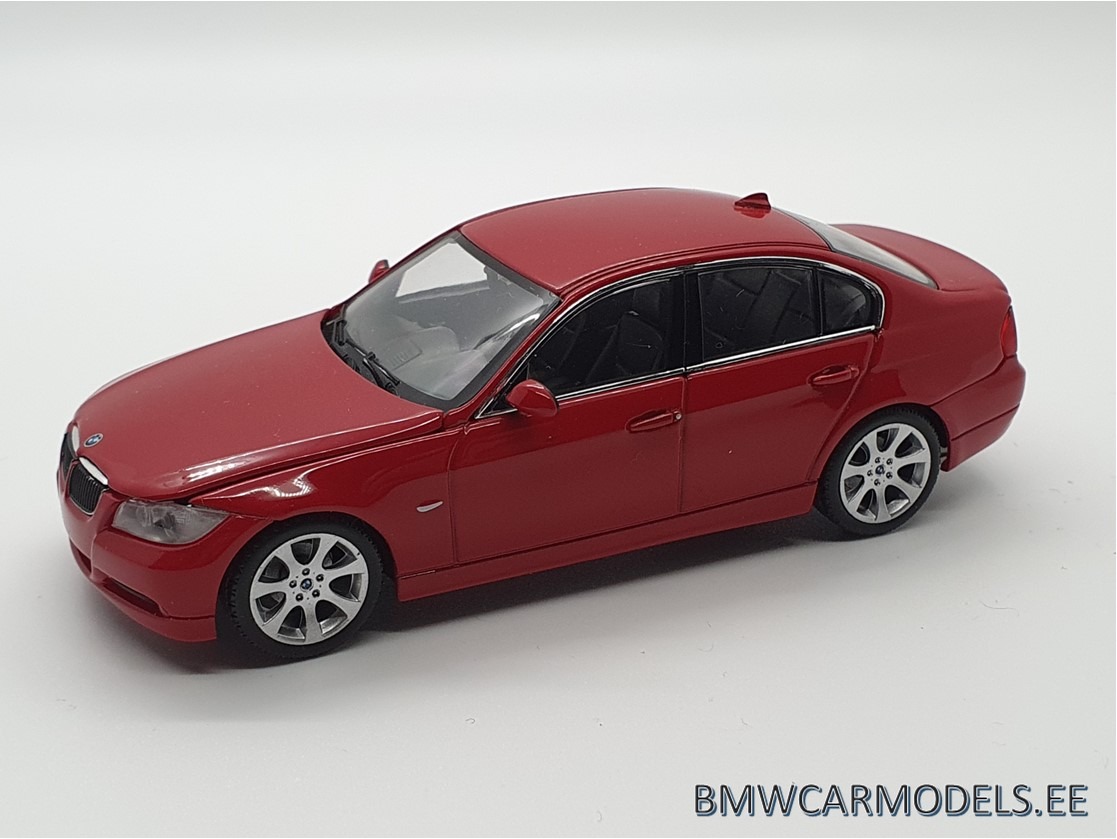
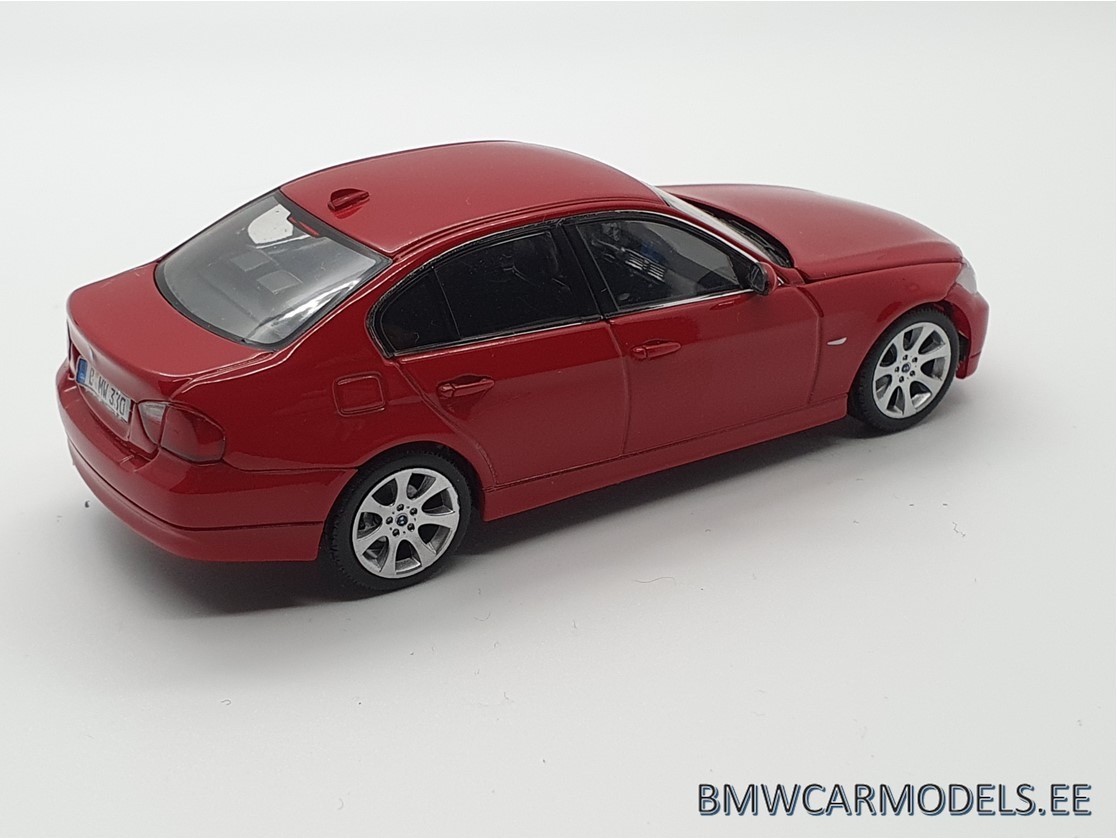
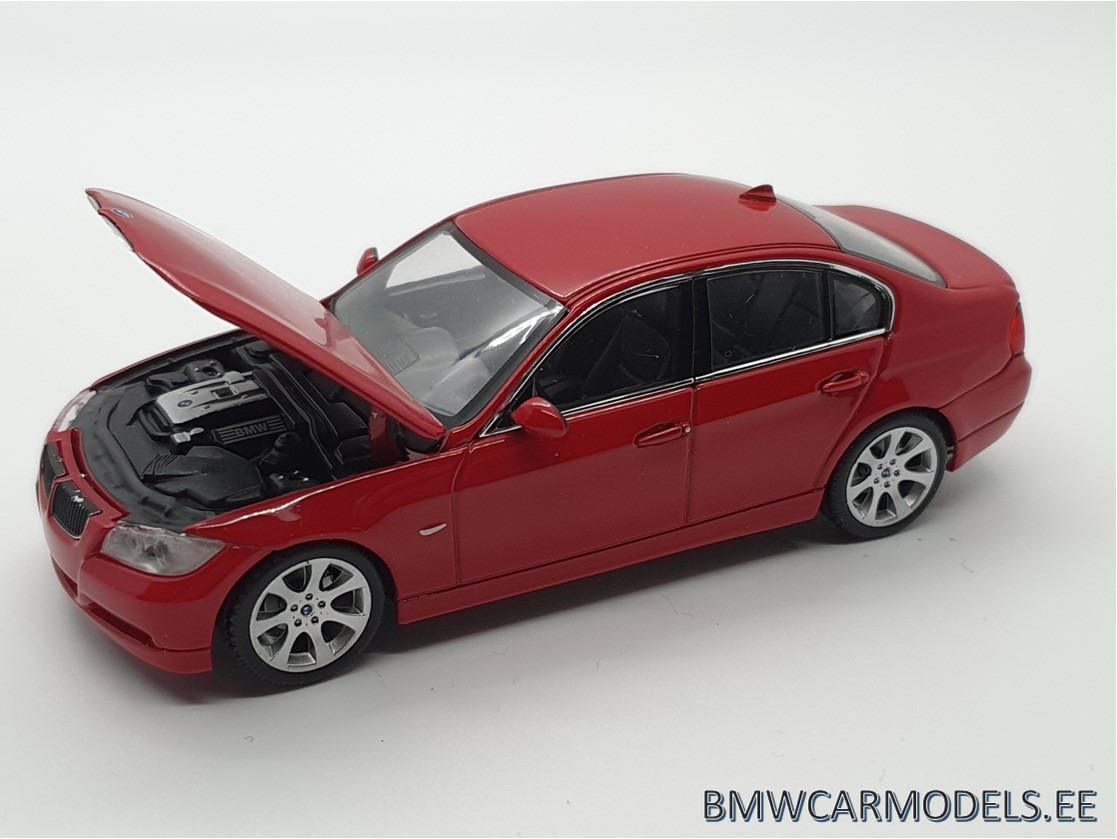
Minu kollektsioonis olev Minichampsi mudel kujutab 2005. aasta autot ja on limiteeritud 2016 eksemplariga.
Tehnilised andmed lühidalt:
Tootmisaeg: 2005–2011
Tootmiskoht: Saksamaa
Mootorid: erinevad nelja- ja kuuesilindrilised bensiini- ning diiselmootorid
Võimsus: sõltuvalt versioonist umbes 122–306 hj
Tootmisarv: 1 825 549 autot (E90 sedaani kogutoodang)
Eripära: E90 põlvkonna sedaan, mis tõi 3. seeriasse modernsema disaini ja uue tehnoloogilise taseme
The BMW 3 Series Sedan (E90) was the model with which BMW moved its core compact premium line into a new era. Introduced in 2005, the E90 generation brought a more modern design, a larger body, improved safety equipment and a more mature overall character compared with the E46 it replaced. At the same time, it retained the driver-focused nature that had always been one of the 3 Series’ greatest strengths. The E90 Sedan combined sportiness, comfort and everyday usability in a way that made it one of BMW’s most important models of the mid-2000s.
Technically, the E90 introduced a number of advances in chassis development, electronics and powertrains. Compared with its predecessor, it became stiffer, safer and more technologically advanced, while still preserving the classic BMW feel built around rear-wheel drive, balanced weight distribution and precise handling. In design terms, the E90 also marked a shift, as it was one of the first 3 Series generations to clearly reflect the bolder BMW styling language of the 2000s. As a result, the E90 Sedan became a model that connected the traditional character of the 3 Series with the technology and appearance of a new era.
The Minichamps model in my collection represents a 2005 car and is limited to 2,016 pieces.
Technical data at a glance:
Production period: 2005–2011
Production location: Germany
Engines: various four- and six-cylinder petrol and diesel engines
Power output: approximately 122–306 hp depending on version
Production total: 1,825,549 cars (total E90 sedan production)
Special feature: the E90-generation sedan, which brought a more modern design and a new technological level to the 3 Series
BMW 3. seeria sedaan (E90) oli mudel, millega BMW viis oma kompaktse premium-klassi keskse mudelirea uude ajastusse. 2005. aastal turule jõudnud E90 põlvkond tõi võrreldes eelkäija E46-ga kaasa modernsema disaini, suurema kere, parema turvavarustuse ja veelgi küpsema üldmulje. Samal ajal säilis 3. seeriale omane juhikeskne iseloom, mis oli jätkuvalt üks mudeli suurimaid tugevusi. E90 sedaan ühendas sportlikkuse, mugavuse ja igapäevase kasutatavuse viisil, mis tegi sellest ühe 2000. aastate keskpaiga olulisema BMW mudeli.
Tehniliselt tõi E90 kaasa mitmeid uuendusi nii veermiku, elektroonika kui ka jõuallikate osas. Võrreldes eelkäijaga muutus auto jäigemaks, turvalisemaks ja tehnoloogiliselt kaasaegsemaks, kuid säilitas siiski klassikalise BMW tunnetuse, kus tähtsal kohal olid tagavedu, hea kaalujaotus ja täpne juhitavus. Disaini poolest tähistas E90 samuti muutust, sest see oli üks esimesi 3. seeria põlvkondi, kus oli selgelt näha 2000. aastate BMW-le omast julgemat vormikeelt. Nii kujunes E90 sedaanist mudel, mis sidus traditsioonilise 3. seeria iseloomu uue ajastu tehnika ja välimusega.
Minu kollektsioonis olev Minichampsi mudel kujutab 2005. aasta autot ja on limiteeritud 2016 eksemplariga.
Tehnilised andmed lühidalt:
Tootmisaeg: 2005–2011
Tootmiskoht: Saksamaa
Mootorid: erinevad nelja- ja kuuesilindrilised bensiini- ning diiselmootorid
Võimsus: sõltuvalt versioonist umbes 122–306 hj
Tootmisarv: 1 825 549 autot (E90 sedaani kogutoodang)
Eripära: E90 põlvkonna sedaan, mis tõi 3. seeriasse modernsema disaini ja uue tehnoloogilise taseme
The BMW 3 Series Sedan (E90) was the model with which BMW moved its core compact premium line into a new era. Introduced in 2005, the E90 generation brought a more modern design, a larger body, improved safety equipment and a more mature overall character compared with the E46 it replaced. At the same time, it retained the driver-focused nature that had always been one of the 3 Series’ greatest strengths. The E90 Sedan combined sportiness, comfort and everyday usability in a way that made it one of BMW’s most important models of the mid-2000s.
Technically, the E90 introduced a number of advances in chassis development, electronics and powertrains. Compared with its predecessor, it became stiffer, safer and more technologically advanced, while still preserving the classic BMW feel built around rear-wheel drive, balanced weight distribution and precise handling. In design terms, the E90 also marked a shift, as it was one of the first 3 Series generations to clearly reflect the bolder BMW styling language of the 2000s. As a result, the E90 Sedan became a model that connected the traditional character of the 3 Series with the technology and appearance of a new era.
The Minichamps model in my collection represents a 2005 car and is limited to 2,016 pieces.
Technical data at a glance:
Production period: 2005–2011
Production location: Germany
Engines: various four- and six-cylinder petrol and diesel engines
Power output: approximately 122–306 hp depending on version
Production total: 1,825,549 cars (total E90 sedan production)
Special feature: the E90-generation sedan, which brought a more modern design and a new technological level to the 3 Series
Foto päris autost. Allikas: Bimmerpost.
Photo of the actual car. Source: Bimmerpost.