
Taust
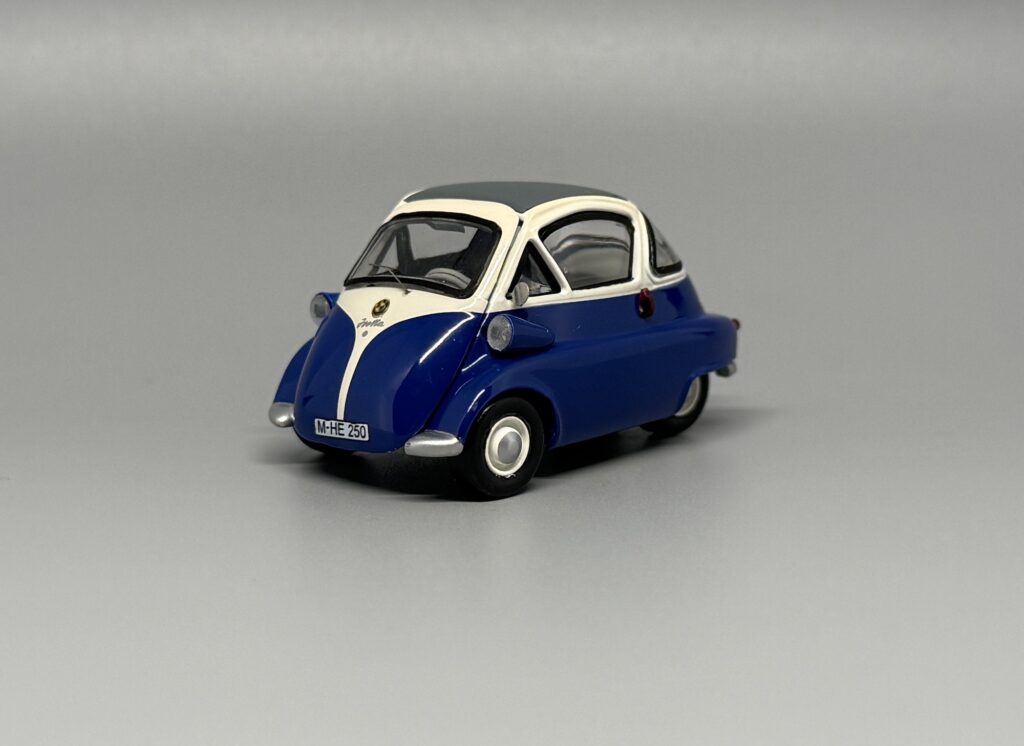
BMW Isetta 250 Standard kuulub BMW ajaloo kõige äratuntavamate ja samas kõige olulisemate väikeste autode hulka. 1950. aastate keskpaigas oli BMW majanduslikult keerulises olukorras ning ettevõte vajas taskukohast mudelit, mida oleks võimalik müüa oluliselt suuremas koguses kui kalleid luksusautosid BMW 501, 502, 503 ja 507. Lahendus leiti Itaaliast, kus Iso oli välja töötanud väikese esimese uksega mikrosõiduki. BMW omandas selle tootmisõigused, kohandas konstruktsiooni oma vajadustele ning tõi 1955. aastal turule BMW Isetta. Väikesest „mullautost” kujunes kiiresti müügiedu ning üks Saksa majandusime sümboleid.
Itaalia idee, BMW tehnika
Isetta algne kontseptsioon pärines Milano ettevõttelt Iso, kuid BMW tegi autole mitmeid olulisi muudatusi. Itaalia originaali kahetaktilise mootori asemel kasutati BMW enda mootorrattatehnikal põhinevat neljataktilist ühesilindrilist jõuallikat. Esimene BMW versioon oli Isetta 250 Standard, mille tootmine algas 1955. aasta kevadel. Auto säilitas Iso kõige iseloomulikuma lahenduse – kogu esiosa moodustava suure ukse –, kuid tehniliselt muutus sellest selgelt BMW enda tõlgendus algsest Isetta ideest.
Standard-versioon
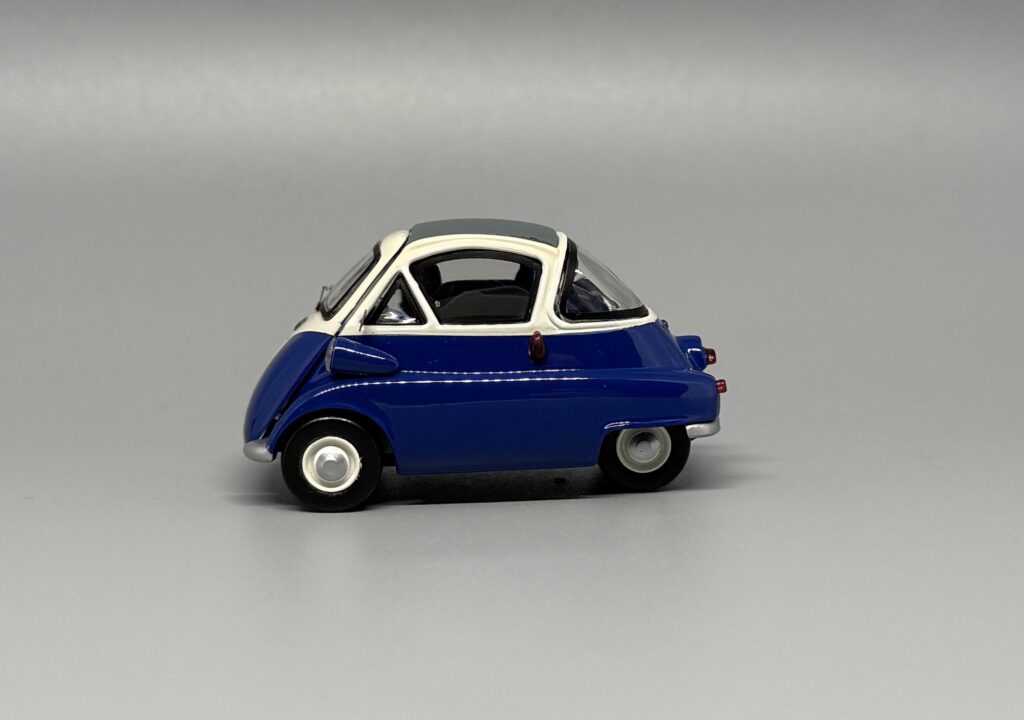
Nimetus Standard tähistab Isetta esimest BMW keretüüpi, mida toodeti 1955. aastast 1957. aasta alguseni. Selle kõige äratuntavamaks tunnuseks olid varasele „bubble window” ehk mullakna konstruktsioonile omased küljeaknad. Külgvaates jagunes klaasipind mitmeks osaks ning kerejoon erines selgelt hilisemast Isetta Exportist. Just see aknalahendus annab Standardile eriti iseloomuliku 1950. aastate mikrosõiduki välimuse.
Standard ja Export
1956. aasta lõpus tõi BMW turule põhjalikult uuendatud Isetta Export versiooni. Export sai ühtlasema kupeelaadse katusejoone ning suuremad lükandaknad, mis muutsid auto välimuse pikemaks ja moodsamaks. Mootorid jäid põhimõtteliselt samaks, kuid kerelahendus muutus märgatavalt. Seetõttu on varane Standard oma erilise aknakujunduse tõttu hilisemast Exportist juba esmapilgul eristatav. Minu kollektsioonis olev mudel kujutab just seda varasemat Isetta arenguetappi.
Üks uks ees
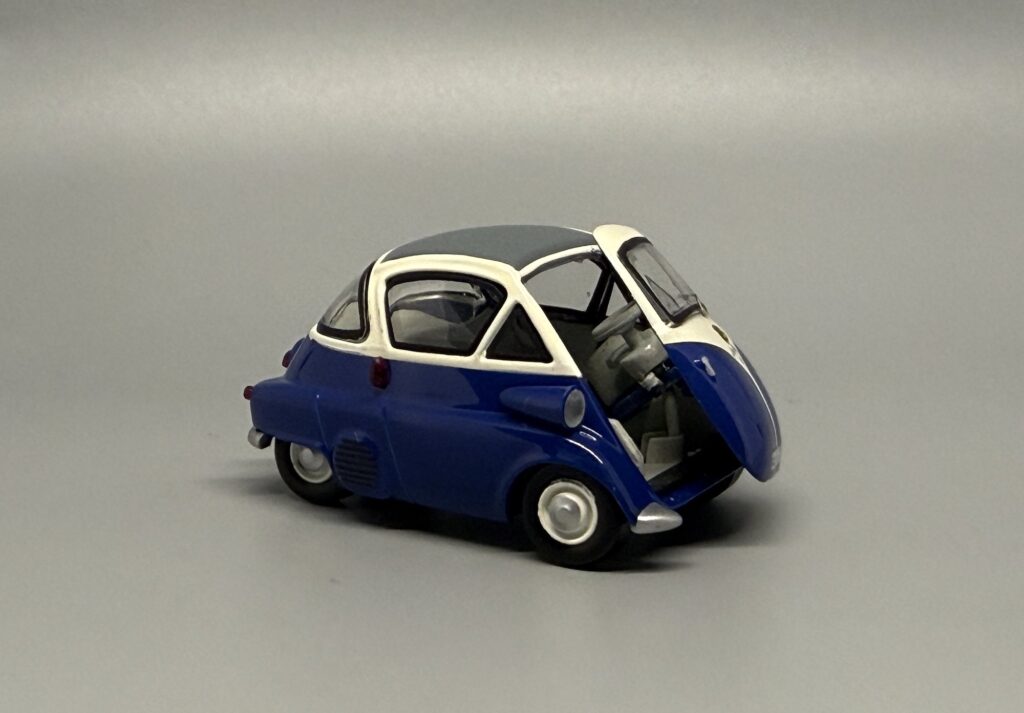
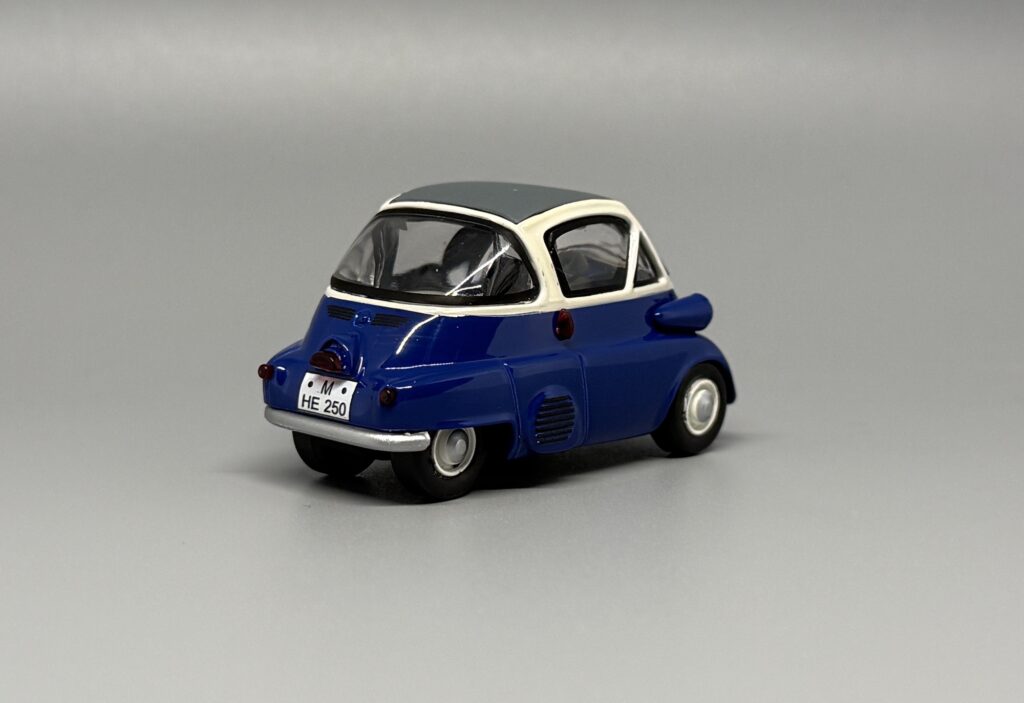
Isetta kõige kuulsam omadus oli selle eesmine uks. Tavapäraste külguste asemel avanes peaaegu kogu auto esiosa ettepoole ning koos uksega liikus ka roolisammas. Selline konstruktsioon võimaldas väga väikeses keres pakkuda kahele inimesele üllatavalt kasutatavat siseruumi. Mootor paiknes auto tagaosas ning väga lähestikku asetsevad tagarattad võimaldasid loobuda tavapärasest diferentsiaalist.
Väike, kuid praktiline
BMW Isetta oli vaid umbes 2,3 meetrit pikk ning selle põhieesmärk ei olnud sportlikkus ega luksus, vaid võimalikult odav ja praktiline liikumine. Kahekohaline salong pakkus ilmastikukaitset inimestele, kes oleksid muidu sageli kasutanud mootorratast või motorollerit. 1950. aastate Euroopa tingimustes oli see oluline eelis: Isetta maksis märksa vähem kui tavapärane sõiduauto, kuid pakkus katust, istmeid kahele inimesele ja võimalust liikuda sõltumata ilmast.
245 cm³ ühesilindriline mootor
Isetta 250 Standard kasutas BMW R25/3 mootorrattast arendatud ühesilindrilist neljataktilist mootorit. Mootori töömaht oli ligikaudu 245 cm³ ning võimsus 12 hj 5800 p/min juures. Tagasihoidlikust võimsusest hoolimata suutis kerge Isetta saavutada umbes 85 km/h tippkiiruse. Linnaliikluses ja lühematel sõitudel oli sellest täiesti piisav ning väike mootor võimaldas hoida ka kütusekulu madalana.
Isetta 300
Juba 1955. aasta sügisel lisas BMW mudelivalikusse suurema mootoriga Isetta 300 Standardi. Selle 295 cm³ mootor arendas 13 hj ning pakkus eelkõige paremat pöördemomenti ja sujuvamat töökarakteristikut, kuigi tippkiirus jäi samuti umbes 85 km/h juurde. 250 ja 300 Standardit toodeti mõnda aega paralleelselt. Seetõttu tuleb ka tootmisarve vaadates eristada kogu Standard-perekonda konkreetsest 250 versioonist.
Oluline müügiedu
BMW Isetta osutus ettevõtte jaoks väga edukaks. BMW Group Classicu järgi müüdi vähem kui kahe aastaga üle 26 000 Isetta 250 Standardi ning koos 300 Standardiga valmistati varase keretüübiga Isettasid ligi 42 000. Hilisem Export-versioon kasvatas müüginumbreid veelgi ning kogu BMW Isetta mudeliperekonna toodang ulatus aastatel 1955–1962 üle 160 000 auto. Sellise müügimahuga oli Isetta BMW 1950. aastate üks olulisemaid mudeleid.
BMW jaoks palju enamat kui väikeauto
Isetta tähtsus BMW ajaloos ei seisne ainult selle ebatavalises välimuses. Auto jõudis turule ajal, mil BMW mudelivalik koosnes suuresti kallistest autodest, mille tootmismahud olid väikesed. Isetta tõi margile täiesti uue ostjaskonna ning aitas kasvatada nii müügimahtu kui ka nähtavust. See ei lahendanud üksinda kõiki BMW majandusprobleeme, kuid oli oluline osa ettevõtte teekonnast olukorrani, kus 1960. aastate Neue Klasse mudelid võimaldasid BMW-l uuesti tugevale kasvule pöörduda.
Ajalooline tähendus
BMW Isetta 250 Standard ühendab endas sõjajärgse Euroopa vajaduse taskukohase transpordi järele ja ühe autotööstuse ajaloo kõige leidlikuma konstruktsiooni. Väike mõõt, üks eesmine uks, mootorrattamootor ja iseloomulik mullakere muutsid selle autoks, mida on raske millegi teisega segi ajada. Samal ajal oli Isetta BMW jaoks äriliselt palju olulisem, kui selle tagasihoidlikud mõõtmed võiksid arvata. Tänapäeval on sellest saanud üks 1950. aastate mikrosõidukite sümboleid ja üks BMW ajaloo kõige omanäolisemaid mudeleid.
Mudel kollektsioonis
Minu kollektsioonis olev mudelauto on Schuco toodang ning kujutab BMW Isetta 250 Standardit. Mudel valmistati piiratud tiraažis kokku 500 eksemplari.
Tehnilised andmed lühidalt
Tootmisaeg: märts 1955 – jaanuar 1957
Keretüüp: kaheistmeline mikrosõiduk
Mootor: ühesilindriline neljataktiline mootor
Töömaht: 245 cm³
Võimsus: 12 hj @ 5800 p/min
Veoskeem: tagavedu
Tippkiirus: 85 km/h
Hind uuena: 2550 Saksa marka
Tootmisarv: üle 26 000 Isetta 250 Standardi
Eripära: BMW Isetta varane „bubble window” keretüüp, mis eelnes hilisemale Export-versioonile
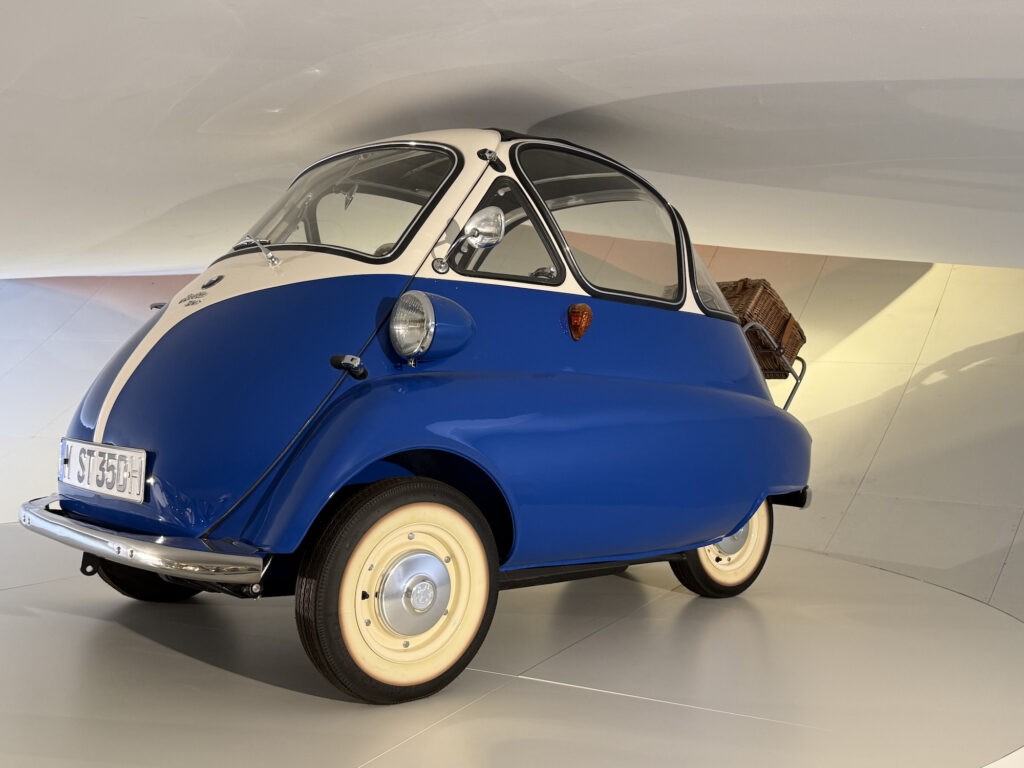
Foto päris autost, BMW muuseum. Foto: Sten-Patrick Kreek