BMW Dixi 3/15 PS Cabriolet kuulub mudeliperre, millega BMW alustas oma teekonda autotootjana. Dixi ja hilisema BMW 3/15 seeria juured ulatusid litsentsi alusel toodetud Austin Sevenini, kuid Eisenachis valmistatud autod kohandati Saksa turu jaoks ning neist sai margi ajaloo seisukohalt väga oluline alguspunkt. Just 3/15 mudelirida tähistas BMW esimesi samme väikeste sõiduautode tootjana ning eri kerevariandid näitasid juba varakult, kui mitmekülgne see väike tehniline baas olla võis.
DA2 Cabriolet esindas selle mudelipere elegantsemat ja vabamat poolt. Võrreldes kinnise Limousine-versiooniga pakkus see avatud sõiduelamust, kuid säilitas samal ajal viimistletud üldmulje. Mudelile oli iseloomulik avatud kere koos püsivate aknaraamidega ning eraldi pagasiruumiosa, mis andis sellele väga selgelt varase 3/15 ajastu ilme. Hilisem DA4 tõi kaasa ümber kujundatud kere ja pikema salongi, kuid DA2 Cabriolet kuulus veel varasemasse arenguetappi ning mõjus seetõttu kompaktsema ja klassikalisema lahendusena.
Tehniliselt jagas Cabriolet ülejäänud 3/15 mudelipere põhiolemust. 747 cm³ ridaneli võimsusega 15 hobujõudu ei muutnud seda kiireks sportautoks, kuid mudeli tugevuseks oli kerge konstruktsioon, lihtne ehitus ja ökonoomne kasutamine. Just selliste eri kerevariantide kaudu kujunes varane BMW 3/15 perekond märksa mitmekesisemaks, kui selle tagasihoidlik tehniline baas esmapilgul lubaks arvata.
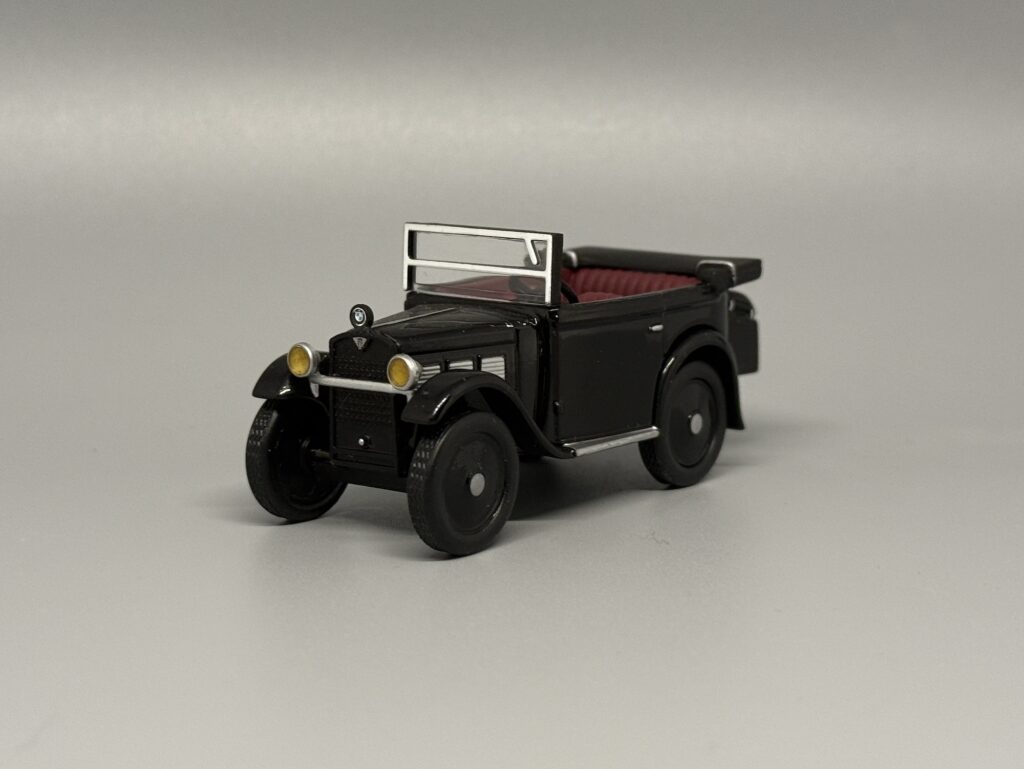
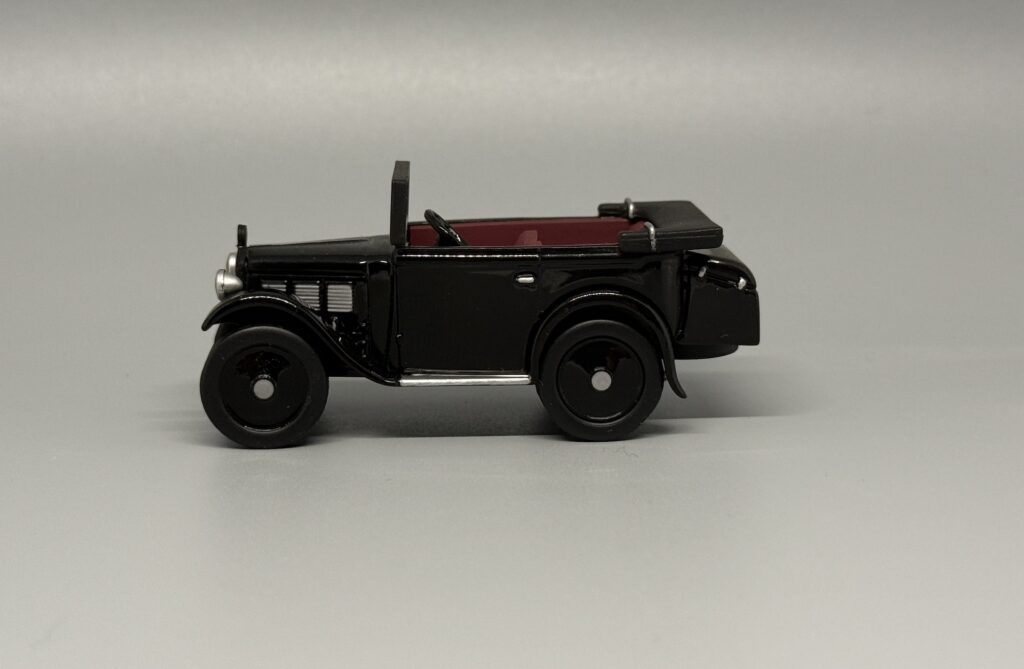
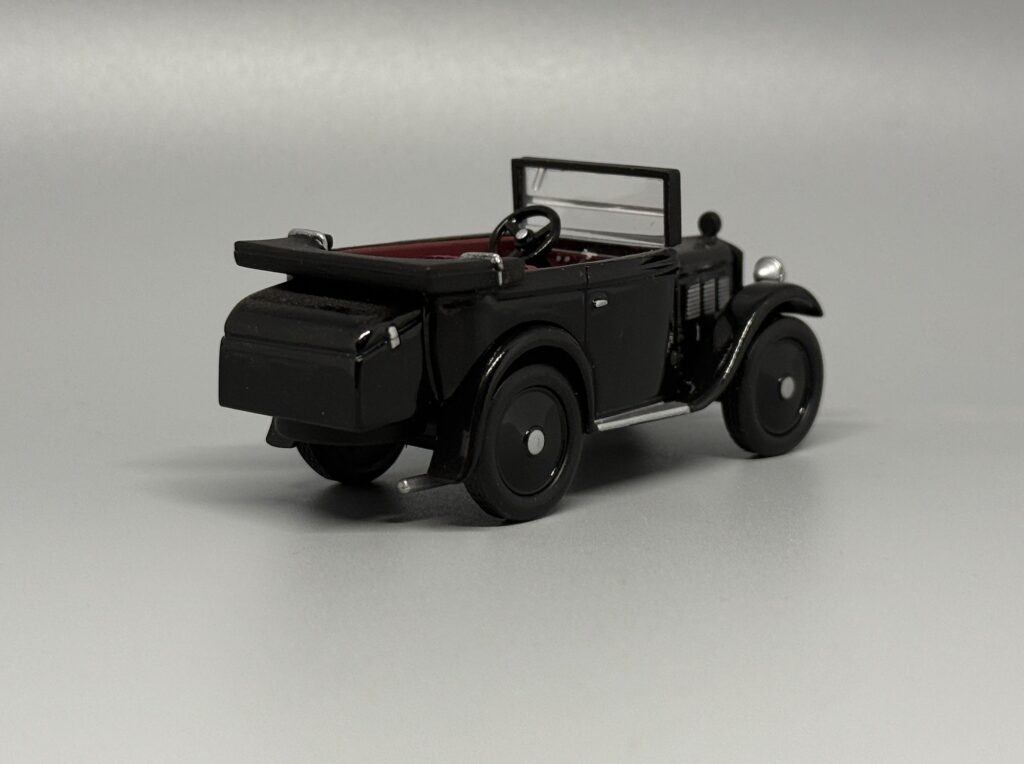
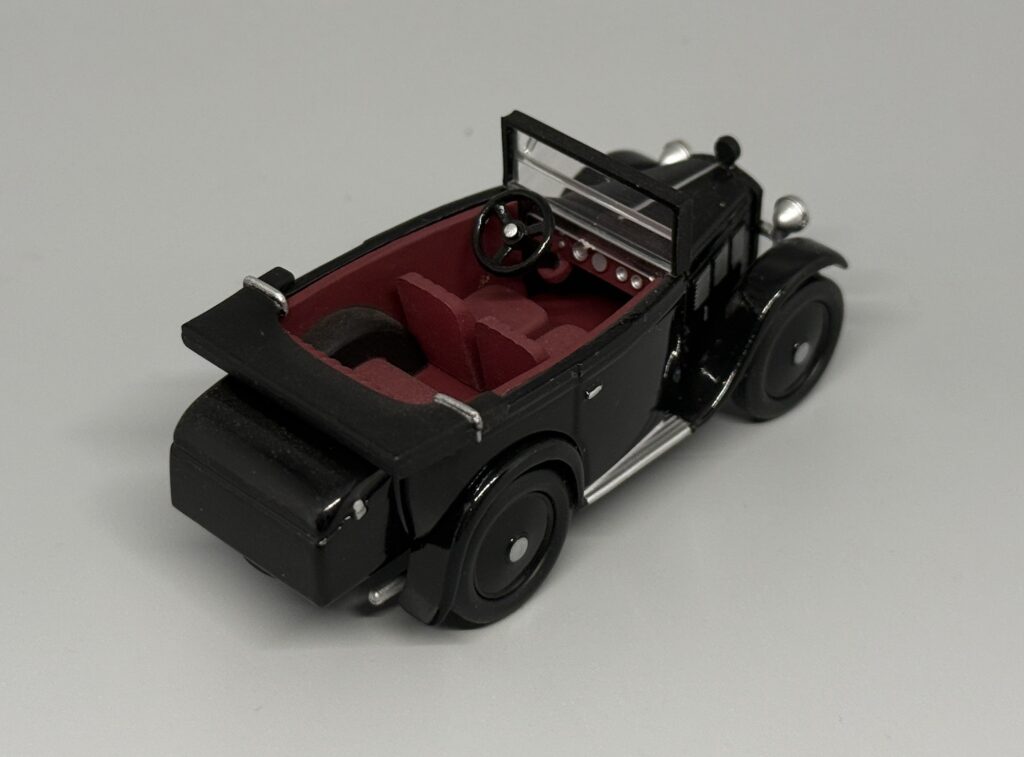
Minu kollektsioonis olev mudel on Schuco toodang ja kujutab BMW Dixi 3/15 PS Cabriolet (DA2) varianti.
Tehnilised andmed lühidalt:
Tootmisaeg: alates märtsist 1929 kuni 1931
Tootmiskoht: Eisenach, Saksamaa
Mootor: 747 cm³ ridaneli
Võimsus: 15 hj
Tootmisarv: kogu varase Dixi 3/15 seeria toodang oli 9307 autot, konkreetse Cabriolet-variandi eraldi tootmisarvu ei ole siin välja toodud
Eripära: avatud kerega varane 3/15 versioon eraldi pagasiruumiosaga
The BMW Dixi 3/15 PS Cabriolet belongs to the model family with which BMW began its journey as an automobile manufacturer. The roots of the Dixi and later BMW 3/15 series went back to the Austin Seven built under licence, but the cars produced in Eisenach were adapted for the German market and became a very important starting point in the brand’s history. The 3/15 model range marked BMW’s first steps as a producer of small passenger cars, and its different body styles already showed how versatile this small technical platform could be.
The DA2 Cabriolet represented the more elegant and open side of the model range. Compared with the closed Limousine version, it offered open-top motoring while still maintaining a refined overall appearance. The model was characterised by its open body, fixed window frames and a distinct rear luggage compartment, all of which gave it the unmistakable look of the early 3/15 era. The later DA4 introduced a redesigned body and a longer passenger compartment, whereas the DA2 Cabriolet still belonged to the earlier stage of development and therefore appeared as a more compact and traditional solution.
Technically, the Cabriolet shared the same basic character as the rest of the 3/15 family. The 747 cc inline-four engine with 15 horsepower did not make it a fast sports car, but the model’s strengths were its light construction, simple engineering and economical operation. It was through such different body styles that the early BMW 3/15 family became far more diverse than its modest technical basis might initially suggest.
The model in my collection is produced by Schuco and represents the BMW Dixi 3/15 PS Cabriolet (DA2).
Technical details at a glance:
Production period: from March 1929 to 1931
Production location: Eisenach, Germany
Engine: 747 cc inline-four
Power output: 15 hp
Production quantity: total production of the early Dixi 3/15 series amounted to 9,307 cars, while a separate production figure for the Cabriolet variant is not specified here
Special feature: early open-bodied 3/15 version with a distinct rear luggage compartment

BMW Dixi 3/15 PS Cabriolet kuulub mudeliperre, millega BMW alustas oma teekonda autotootjana. Dixi ja hilisema BMW 3/15 seeria juured ulatusid litsentsi alusel toodetud Austin Sevenini, kuid Eisenachis valmistatud autod kohandati Saksa turu jaoks ning neist sai margi ajaloo seisukohalt väga oluline alguspunkt. Just 3/15 mudelirida tähistas BMW esimesi samme väikeste sõiduautode tootjana ning eri kerevariandid näitasid juba varakult, kui mitmekülgne see väike tehniline baas olla võis.
DA2 Cabriolet esindas selle mudelipere elegantsemat ja vabamat poolt. Võrreldes kinnise Limousine-versiooniga pakkus see avatud sõiduelamust, kuid säilitas samal ajal viimistletud üldmulje. Mudelile oli iseloomulik avatud kere koos püsivate aknaraamidega ning eraldi pagasiruumiosa, mis andis sellele väga selgelt varase 3/15 ajastu ilme. Hilisem DA4 tõi kaasa ümber kujundatud kere ja pikema salongi, kuid DA2 Cabriolet kuulus veel varasemasse arenguetappi ning mõjus seetõttu kompaktsema ja klassikalisema lahendusena.
Tehniliselt jagas Cabriolet ülejäänud 3/15 mudelipere põhiolemust. 747 cm³ ridaneli võimsusega 15 hobujõudu ei muutnud seda kiireks sportautoks, kuid mudeli tugevuseks oli kerge konstruktsioon, lihtne ehitus ja ökonoomne kasutamine. Just selliste eri kerevariantide kaudu kujunes varane BMW 3/15 perekond märksa mitmekesisemaks, kui selle tagasihoidlik tehniline baas esmapilgul lubaks arvata.
Minu kollektsioonis olev mudel on Schuco toodang ja kujutab BMW Dixi 3/15 PS Cabriolet (DA2) varianti.
Tehnilised andmed lühidalt:
Tootmisaeg: alates märtsist 1929 kuni 1931
Tootmiskoht: Eisenach, Saksamaa
Mootor: 747 cm³ ridaneli
Võimsus: 15 hj
Tootmisarv: kogu varase Dixi 3/15 seeria toodang oli 9307 autot, konkreetse Cabriolet-variandi eraldi tootmisarvu ei ole siin välja toodud
Eripära: avatud kerega varane 3/15 versioon eraldi pagasiruumiosaga
The BMW Dixi 3/15 PS Cabriolet belongs to the model family with which BMW began its journey as an automobile manufacturer. The roots of the Dixi and later BMW 3/15 series went back to the Austin Seven built under licence, but the cars produced in Eisenach were adapted for the German market and became a very important starting point in the brand’s history. The 3/15 model range marked BMW’s first steps as a producer of small passenger cars, and its different body styles already showed how versatile this small technical platform could be.
The DA2 Cabriolet represented the more elegant and open side of the model range. Compared with the closed Limousine version, it offered open-top motoring while still maintaining a refined overall appearance. The model was characterised by its open body, fixed window frames and a distinct rear luggage compartment, all of which gave it the unmistakable look of the early 3/15 era. The later DA4 introduced a redesigned body and a longer passenger compartment, whereas the DA2 Cabriolet still belonged to the earlier stage of development and therefore appeared as a more compact and traditional solution.
Technically, the Cabriolet shared the same basic character as the rest of the 3/15 family. The 747 cc inline-four engine with 15 horsepower did not make it a fast sports car, but the model’s strengths were its light construction, simple engineering and economical operation. It was through such different body styles that the early BMW 3/15 family became far more diverse than its modest technical basis might initially suggest.
The model in my collection is produced by Schuco and represents the BMW Dixi 3/15 PS Cabriolet (DA2).
Technical details at a glance:
Production period: from March 1929 to 1931
Production location: Eisenach, Germany
Engine: 747 cc inline-four
Power output: 15 hp
Production quantity: total production of the early Dixi 3/15 series amounted to 9,307 cars, while a separate production figure for the Cabriolet variant is not specified here
Special feature: early open-bodied 3/15 version with a distinct rear luggage compartment