BMW 502 V8 tähistas 1950. aastate BMW jaoks olulist arenguhüpet ning viis margi sõjajärgse luksusautode tootmise uuele tasemele. Mudelit esitleti 1954. aastal BMW 501 edasiarendusena, kuid erinevalt eelkäijast tõi 502 kaasa mitte ainult esinduslikuma varustuse, vaid ka täiesti uue jõuallika. Visuaalselt säilitas auto 501-lt tuttava elegantse ja voolujoonelise kerekuju, mille tõttu kuulus see samuti rahvasuus niinimetatud barokk-inglite hulka, kuid tehniliselt oli tegemist juba märksa ambitsioonikama autoga.
BMW 502 suurimaks uuenduseks oli uus 2,6-liitrine V8-mootor, mis arendas 100 hobujõudu. Tegemist oli maailma esimese seeriaautosse paigaldatud täielikult kergsulamist mootoriga, mis andis suurele sedaanile senisest palju väärikama dünaamika. Tippkiirus ulatus umbes 160 km/h-ni, mis oli 1950. aastate keskpaiga luksussedaani kohta väga muljetavaldav näitaja. Nagu ka BMW 501 puhul, oli neljaukseline sedaan kuni kuuekohaline ning rõhus eelkõige mugavusele, sujuvale sõidule ja esinduslikule üldmuljele.
Kuigi BMW 502 oli tehniliselt tähelepanuväärne ja oma ajastu kohta väga edumeelne, jäi selle müügiedu tagasihoidlikuks. Mudel oli saadaval mitmes eri teostuses ja mitme mudelitähise all, kuid suurte V8-luksusautode müük jäi siiski oodatust tagasihoidlikumaks. Sellest hoolimata oli 502 margi ajaloos tähtis mudel, sest see näitas BMW soovi konkureerida taas Saksa autotööstuse kõrgemas klassis mitte ainult elegantsi, vaid ka tehnilise sisuga.
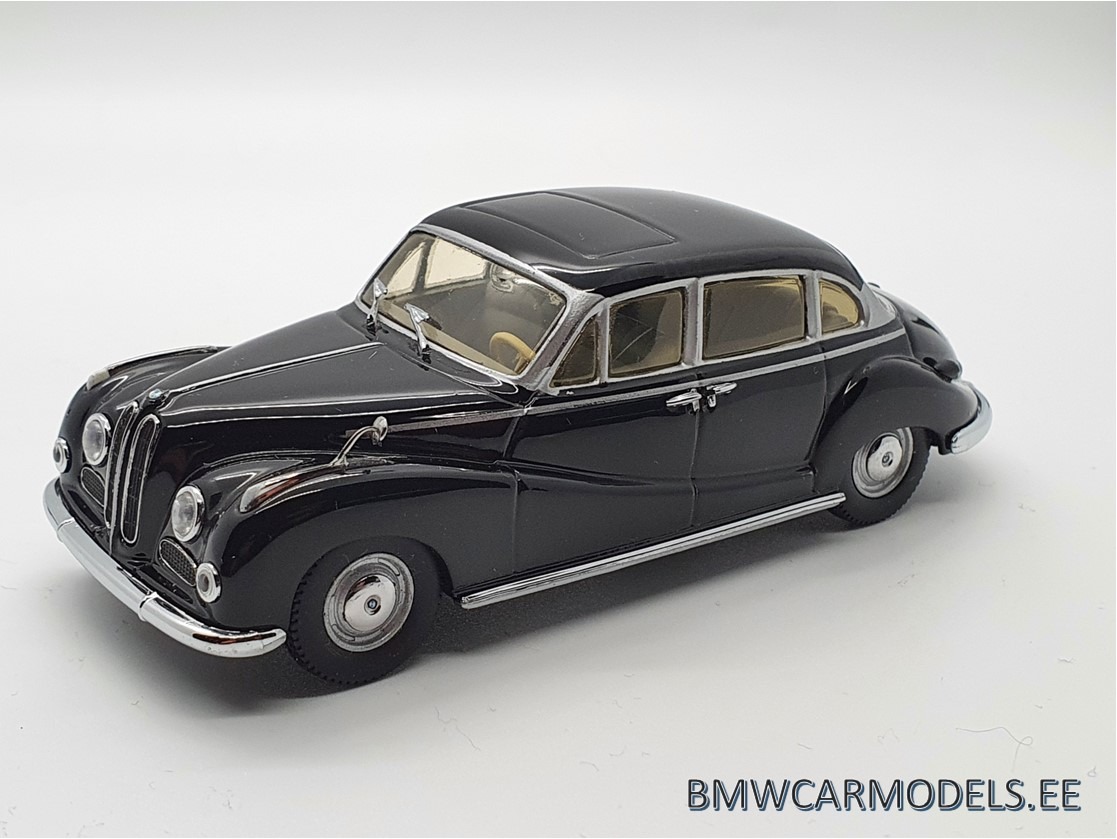
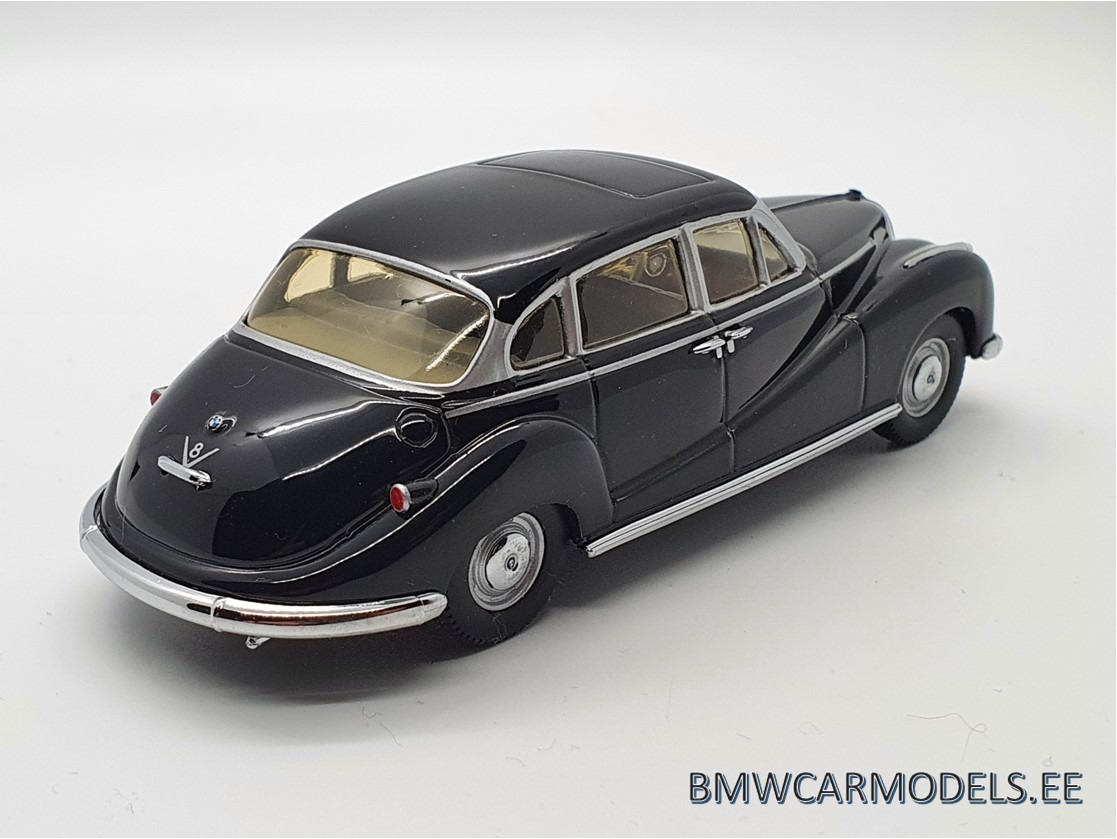
Minu kollektsioonis olev mudel on Minichampsi toodang.
Tehnilised andmed lühidalt:
Tootmisaeg: 09/1954 kuni 12/1963
Tootmiskoht: München, Saksamaa
Mootor: 2,6 l V8
Võimsus: 100 hj
Tootmisarv: BMW 502 sedaani toodeti kokku üle 7200 eksemplari
Eripära: maailma esimese täielikult kergsulamist mootoriga seeriaauto üks tuntumaid varaseid näiteid
The BMW 502 V8 marked an important step forward for BMW in the 1950s and elevated the brand’s post-war luxury car production to a new level. The model was introduced in 1954 as a further development of the BMW 501, but unlike its predecessor, the 502 brought not only more prestigious equipment but also an entirely new power unit. Visually, the car retained the elegant and flowing body shape familiar from the 501, which made it part of the group of cars popularly known as the Baroque Angels, yet technically it was already a far more ambitious automobile.
The greatest innovation of the BMW 502 was its new 2.6-litre V8 engine, producing 100 horsepower. It was the world’s first series-production car engine made entirely of light alloy, giving the large saloon significantly more refined performance than before. Top speed reached around 160 km/h, which was a highly impressive figure for a luxury sedan of the mid-1950s. As with the BMW 501, the four-door saloon could accommodate up to six occupants and placed strong emphasis on comfort, smooth driving characteristics and an overall dignified appearance.
Although the BMW 502 was technically remarkable and highly advanced for its time, its commercial success remained limited. The model was available in several different versions and under various model designations, but sales of large V8 luxury cars remained below expectations. Nevertheless, the 502 was an important model in BMW history, as it demonstrated the company’s determination to compete once again in the upper class of the German automotive industry not only through elegance, but also through engineering substance.
The model in my collection is produced by Minichamps.
Technical details at a glance:
Production period: 09/1954 to 12/1963
Production location: Munich, Germany
Engine: 2.6-litre V8
Power output: 100 hp
Production quantity: more than 7,200 BMW 502 saloons were produced
Special feature: one of the best-known early examples of a production car powered by the world’s first all-light-alloy V8 engine
BMW 502 V8 tähistas 1950. aastate BMW jaoks olulist arenguhüpet ning viis margi sõjajärgse luksusautode tootmise uuele tasemele. Mudelit esitleti 1954. aastal BMW 501 edasiarendusena, kuid erinevalt eelkäijast tõi 502 kaasa mitte ainult esinduslikuma varustuse, vaid ka täiesti uue jõuallika. Visuaalselt säilitas auto 501-lt tuttava elegantse ja voolujoonelise kerekuju, mille tõttu kuulus see samuti rahvasuus niinimetatud barokk-inglite hulka, kuid tehniliselt oli tegemist juba märksa ambitsioonikama autoga.
BMW 502 suurimaks uuenduseks oli uus 2,6-liitrine V8-mootor, mis arendas 100 hobujõudu. Tegemist oli maailma esimese seeriaautosse paigaldatud täielikult kergsulamist mootoriga, mis andis suurele sedaanile senisest palju väärikama dünaamika. Tippkiirus ulatus umbes 160 km/h-ni, mis oli 1950. aastate keskpaiga luksussedaani kohta väga muljetavaldav näitaja. Nagu ka BMW 501 puhul, oli neljaukseline sedaan kuni kuuekohaline ning rõhus eelkõige mugavusele, sujuvale sõidule ja esinduslikule üldmuljele.
Kuigi BMW 502 oli tehniliselt tähelepanuväärne ja oma ajastu kohta väga edumeelne, jäi selle müügiedu tagasihoidlikuks. Mudel oli saadaval mitmes eri teostuses ja mitme mudelitähise all, kuid suurte V8-luksusautode müük jäi siiski oodatust tagasihoidlikumaks. Sellest hoolimata oli 502 margi ajaloos tähtis mudel, sest see näitas BMW soovi konkureerida taas Saksa autotööstuse kõrgemas klassis mitte ainult elegantsi, vaid ka tehnilise sisuga.
Minu kollektsioonis olev mudel on Minichampsi toodang.
Tehnilised andmed lühidalt:
Tootmisaeg: 09/1954 kuni 12/1963
Tootmiskoht: München, Saksamaa
Mootor: 2,6 l V8
Võimsus: 100 hj
Tootmisarv: BMW 502 sedaani toodeti kokku üle 7200 eksemplari
Eripära: maailma esimese täielikult kergsulamist mootoriga seeriaauto üks tuntumaid varaseid näiteid
The BMW 502 V8 marked an important step forward for BMW in the 1950s and elevated the brand’s post-war luxury car production to a new level. The model was introduced in 1954 as a further development of the BMW 501, but unlike its predecessor, the 502 brought not only more prestigious equipment but also an entirely new power unit. Visually, the car retained the elegant and flowing body shape familiar from the 501, which made it part of the group of cars popularly known as the Baroque Angels, yet technically it was already a far more ambitious automobile.
The greatest innovation of the BMW 502 was its new 2.6-litre V8 engine, producing 100 horsepower. It was the world’s first series-production car engine made entirely of light alloy, giving the large saloon significantly more refined performance than before. Top speed reached around 160 km/h, which was a highly impressive figure for a luxury sedan of the mid-1950s. As with the BMW 501, the four-door saloon could accommodate up to six occupants and placed strong emphasis on comfort, smooth driving characteristics and an overall dignified appearance.
Although the BMW 502 was technically remarkable and highly advanced for its time, its commercial success remained limited. The model was available in several different versions and under various model designations, but sales of large V8 luxury cars remained below expectations. Nevertheless, the 502 was an important model in BMW history, as it demonstrated the company’s determination to compete once again in the upper class of the German automotive industry not only through elegance, but also through engineering substance.
The model in my collection is produced by Minichamps.
Technical details at a glance:
Production period: 09/1954 to 12/1963
Production location: Munich, Germany
Engine: 2.6-litre V8
Power output: 100 hp
Production quantity: more than 7,200 BMW 502 saloons were produced
Special feature: one of the best-known early examples of a production car powered by the world’s first all-light-alloy V8 engine
Originaalfoto päris autost. Original photo of the real car